People often come across internet slang while texting, scrolling through social media, or chatting online. One abbreviation that appears frequently is SMH.
Many users search for the term because they see it in conversations but are unsure what it means.
The popularity of texting shortcuts has made acronyms a normal part of digital communication.
Understanding these terms helps people follow conversations more easily and avoid confusion when chatting with friends or online communities.
If you have ever received a message containing “SMH” and wondered what the sender meant, this guide explains everything in simple language.
From its meaning and history to its use on different platforms, you’ll learn exactly how and when people use this common internet expression.
Meaning & Definition of SMH
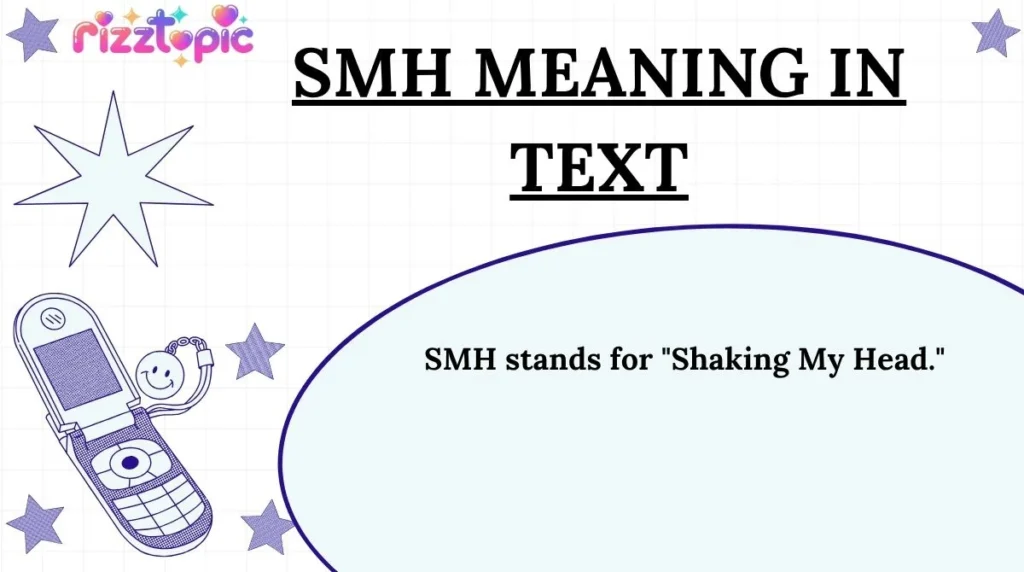
SMH stands for “Shaking My Head.” It is used to express disappointment, disbelief, frustration, embarrassment, or annoyance about something someone said or did.
When people type SMH, they are describing the action of physically shaking their head in reaction to a situation. Instead of writing a long explanation, they use this short acronym to quickly show their feelings.
Primary Meaning
The most common meaning is:
SMH = Shaking My Head
Example:
- “You forgot your keys again? SMH.”
- “They canceled the event at the last minute. SMH.”
Secondary Meanings
Although rare, some people jokingly use SMH to mean:
- So Much Hate
- Smack My Head
- Shaking My Hands
However, these meanings are uncommon. In most online conversations, SMH almost always means Shaking My Head.
Quick Examples
- “He spent all his money on snacks. SMH.”
- “You watched the entire series without me? SMH.”
- “They missed an easy goal. SMH.”
The term is usually negative or critical, but it can also be used playfully among friends.
Background & Origin of SMH
SMH originated during the early years of internet messaging and online forums. As texting became more popular, users began creating abbreviations to save time and effort.
The phrase “shaking my head” existed long before the internet. People naturally shook their heads to show disappointment or disbelief. Online users simply shortened the expression into the acronym SMH.
The term gained popularity during the 2000s through:
- Online chat rooms
- Text messaging
- Discussion forums
- Social networking sites
As social media expanded, SMH became one of the most recognized internet abbreviations. Platforms such as Twitter, Facebook, Instagram, and Snapchat helped spread it to a wider audience.
The acronym became especially popular because it communicates emotion quickly. Instead of typing a full sentence about being disappointed, users can simply type “SMH.”
Today, SMH is understood by millions of internet users worldwide and remains one of the most common texting abbreviations.
Usage in Different Contexts
SMH can appear in many types of conversations. The meaning stays mostly the same, but the tone may change depending on the situation.
Casual Text Messages
Friends often use SMH when joking or expressing frustration.
Examples:
- “You overslept again? SMH.”
- “You forgot my birthday? SMH.”
Social Media Posts
Users add SMH to reactions about news, trends, or events.
Examples:
- “Another price increase. SMH.”
- “People still believe that rumor. SMH.”
Online Gaming
Gamers use SMH when teammates make mistakes.
Examples:
- “We had the win and threw it away. SMH.”
- “Why would you do that move? SMH.”
Workplace Conversations
SMH is generally less common in professional communication because it can appear informal or critical.
Example:
- “The meeting was delayed again. SMH.”
Most workplaces prefer clearer and more professional wording.
Meanings Across Platforms
Although the definition remains the same, usage varies slightly across platforms.
On WhatsApp, SMH is commonly used between friends and family.
Example:
- “You sent the message to the wrong group 😂 SMH.”
Users include SMH in captions and comments.
Example:
- “Can’t believe this happened. SMH.”
TikTok
TikTok creators often use SMH in video captions to react to funny or shocking content.
Example:
- “Why would someone do this? SMH.”
Snapchat
Snapchat users frequently add SMH to quick reactions.
Example:
- “Missed the bus again. SMH.”
Across all platforms, the core meaning remains disappointment, disbelief, or mild frustration.
Other Meanings of SMH in Different Fields
Although “Shaking My Head” is the most common meaning, SMH can have different definitions in specialized industries.
Medical Field
SMH may refer to:
- Submucosal Hemorrhage
- Senior Mental Health
The exact meaning depends on the medical context.
Aviation
In aviation-related discussions, SMH may represent technical terms specific to an organization or document.
Technology
Some technical documents use SMH as an internal abbreviation for systems or processes.
Academic Research
Researchers occasionally use SMH as a shortened form of project names or study titles.
Because these meanings are highly specialized, most people encountering SMH online should assume it means Shaking My Head.
Common Misconceptions & Mistakes
Many people misunderstand SMH when they first encounter it.
Mistake 1: Thinking It Means Laughing
SMH is not a laughing acronym.
Incorrect:
- SMH = laughing
Correct:
- SMH = disappointment or disbelief
Mistake 2: Using It in Formal Emails
SMH is internet slang and may appear unprofessional.
Avoid:
- “The report is late. SMH.”
Mistake 3: Assuming It Is Always Serious
Friends often use SMH playfully.
Example:
- “You ate my fries again. SMH 😂”
Mistake 4: Confusing It With Facepalm
Both show frustration, but facepalm usually suggests embarrassment, while SMH focuses on disappointment or disbelief.
Similar Terms & Alternatives
| Term | Meaning | Tone |
|---|---|---|
| SMH | Shaking My Head | Disappointed |
| OMG | Oh My God | Surprised |
| LOL | Laughing Out Loud | Funny |
| BRB | Be Right Back | Neutral |
| TBH | To Be Honest | Honest opinion |
| Facepalm | Embarrassment | Frustrated |
| Sigh | Tired or annoyed | Mild frustration |
| WTF | Shock or confusion | Strong reaction |
These alternatives may fit different situations depending on the emotion you want to express.
How to Respond to SMH
When someone sends SMH, your response depends on the situation.
Casual Responses
- “I know, right?”
- “My bad 😅”
- “I can’t believe it either.”
- “Don’t remind me 😂”
Chat Examples
Friend: You forgot your wallet again. SMH
You: I know 😅
Friend: You missed the movie. SMH
You: Traffic was terrible!
Friend: You ate the last slice. SMH 😂
You: No regrets 😂
Friend: Another late-night gaming session? SMH
You: Worth it 😎
Differences Between SMH and Similar Words
SMH vs LOL
- SMH shows disappointment.
- LOL shows amusement.
SMH vs Facepalm
- SMH focuses on disbelief.
- Facepalm focuses on embarrassment.
SMH vs OMG
- SMH is negative or critical.
- OMG is general surprise.
SMH vs Sigh
- SMH feels stronger.
- Sigh feels softer and calmer.
Understanding these differences helps you choose the right expression.
Relevance in Online Conversations & Dating Apps
SMH is commonly used in online conversations because it communicates emotion quickly.
On dating apps, users may use SMH when reacting to funny, awkward, or disappointing situations.
Examples:
- “Another person who only replies once a week. SMH.”
- “You really used that pickup line? SMH 😂”
The abbreviation helps make conversations feel casual and relatable. However, excessive use can sometimes appear negative, so balance is important.
Many younger users understand SMH immediately, making it useful in fast-moving chats.
Popularity & Trends Over Time
SMH has remained popular for more than a decade. Interest increased as texting and social media usage grew worldwide.
The term became especially common during:
- The rise of smartphones
- Twitter’s early growth
- Expansion of texting culture
- Growth of TikTok and Snapchat
Google Trends data over the years shows steady interest in searches related to SMH meaning, especially among people encountering the term for the first time.
Today, it remains one of the most searched internet abbreviations because new users continuously join social media platforms and encounter it in conversations.
FAQs
What does SMH mean in text messages?
SMH means Shaking My Head, usually expressing disappointment, disbelief, or frustration.
Is SMH rude?
Not usually. It can sound critical, but it is often used jokingly among friends.
What does SMH mean on Snapchat?
On Snapchat, it typically means Shaking My Head and expresses disbelief or annoyance.
What does SMH mean from a girl?
The meaning is generally the same. It usually shows disappointment, frustration, or playful criticism.
Can SMH be positive?
Rarely. Most uses are negative or mildly critical, though it can be playful.
What is the difference between SMH and LOL?
SMH expresses disappointment, while LOL expresses laughter.
Is SMH still popular?
Yes. It remains widely used across texting apps and social media platforms.
Conclusion
SMH is one of the most recognizable internet abbreviations used in modern digital communication. It stands for Shaking My Head and is commonly used to express disappointment, disbelief, frustration, or mild annoyance.
The acronym has been popular for years because it allows people to communicate emotions quickly without writing long explanations.
Whether it appears in text messages, social media comments, or online chats, the meaning is usually easy to understand once you know the context.
As internet language continues to evolve, SMH remains a useful and widely recognized expression.
Knowing how and when to use it can help you better understand online conversations and communicate naturally in today’s digital world.