People often see the term “AFK” in chats, games, and social media posts. It is one of the most common internet abbreviations used today.
Many users search for the meaning because they notice it in conversations but are not fully sure what it means.
The internet moves fast, and short forms help people reply quickly. AFK is popular because it saves time and clearly tells others that someone is not active for a moment.
It appears in texting apps, online games, work chats, and even dating apps.
Understanding AFK meaning in text can help you communicate better online. Whether you use WhatsApp, TikTok, Snapchat, or Instagram, knowing this term makes digital conversations easier and more natural.
In this guide, you will learn the full meaning of AFK, where it came from, how people use it, and how it changes across platforms. You will also see examples, common mistakes, and related internet slang.
Meaning & Definition of AFK
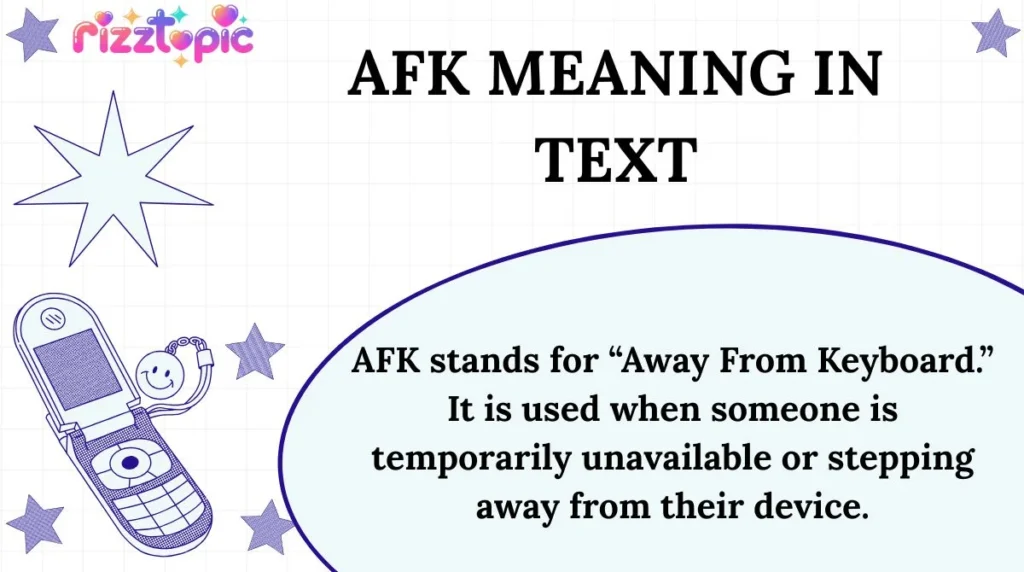
AFK stands for “Away From Keyboard.” It is used when someone is temporarily unavailable or stepping away from their device. The term tells others that the person may not reply immediately.
Originally, AFK referred to desktop computer users who literally left their keyboard. Today, the meaning is broader. It simply means someone is inactive, busy, or taking a short break from chatting.
People use AFK in many situations:
- During online gaming
- In group chats
- While working remotely
- On livestreams
- In social media comments
Here are simple examples:
- “I’ll be AFK for 10 minutes.”
- “Sorry, I was AFK during the meeting.”
- “AFK rn, talk later.”
The abbreviation is casual and friendly. It is mostly used in informal conversations, but some remote teams also use it in workplace chats.
Secondary meanings are rare, but AFK can sometimes suggest:
- Mentally distracted
- Not paying attention
- Temporarily offline
For example:
- “He’s in the chat but totally AFK.”
In most cases, though, AFK simply means the person is away and cannot respond quickly.
Background & Origin of AFK
AFK became popular during the early internet era. It first appeared in online chat rooms, multiplayer games, and IRC platforms in the 1990s.
At that time, many people used desktop computers. When someone needed to leave their desk, they typed “AFK” to inform others they would not respond for a while.
The gaming world helped the term spread quickly. Multiplayer games required teamwork and communication. Players often typed:
- “AFK 5 min”
- “Going AFK”
- “Back soon”
As internet culture grew, AFK moved beyond gaming communities. Social media apps, messaging platforms, and workplace tools adopted the term naturally.
Today, AFK is part of everyday digital language. Even mobile phone users say AFK, although they are no longer using a physical keyboard most of the time.
The phrase survived because it is:
- Short
- Easy to understand
- Fast to type
- Universally recognized online
Modern internet slang changes quickly, but AFK has remained popular for decades. It is now considered a classic online abbreviation.
Usage in Different Contexts
AFK meaning in text changes slightly depending on the situation. The core idea stays the same, but the tone can differ across conversations.
In Chat Conversations
Friends use AFK casually when stepping away.
Examples:
- “AFK, dinner time.”
- “Hold on, I’m AFK for a sec.”
- “Be right back, AFK 😊”
It helps avoid confusion when replies suddenly stop.
In Online Gaming
Gaming communities use AFK heavily. Players often announce they are leaving temporarily during matches or team activities.
Examples:
- “Tank is AFK.”
- “Don’t start yet, I’m AFK.”
- “Player removed for being AFK.”
Some games even punish users who stay inactive too long.
In Workplace Chats
Remote teams sometimes use AFK in apps like Slack or Microsoft Teams.
Examples:
- “AFK for lunch.”
- “Currently AFK, back at 2 PM.”
In professional spaces, it sounds casual but acceptable in relaxed environments.
On Livestreams
Streamers and content creators also use AFK.
Examples:
- “AFK screen starting soon.”
- “Streamer went AFK.”
This lets viewers know the creator stepped away briefly.
Meanings Across Platforms
Different apps use AFK in similar ways, but the style can change depending on the platform culture.
On WhatsApp, AFK usually means someone is busy or temporarily unavailable.
Examples:
- “AFK rn, call you later.”
- “Sorry, was AFK.”
The tone is casual and friendly.
Instagram users may use AFK in:
- DMs
- Stories
- Notes
- Captions
Example:
- “Went AFK all weekend ✨”
It can suggest taking a break from social media.
TikTok
TikTok creators use AFK humorously in videos and captions.
Examples:
- “POV: Teacher calls your name while you’re mentally AFK.”
- “Me going AFK after one assignment.”
Here, AFK can also mean mentally distracted.
Snapchat
Snapchat users often type AFK when leaving a conversation temporarily.
Example:
- “AFK, streaks later 😅”
It keeps friends informed without sounding formal.
Other Meanings of AFK in Different Fields
Although AFK mainly means “Away From Keyboard,” it may have other meanings in technical or specialized areas.
In Medical Terms
AFK is not widely used medically, but abbreviations sometimes overlap in healthcare systems. Context matters greatly.
In Aviation
Some internal aviation or technical systems may use AFK as a code or abbreviation, though this is uncommon for the general public.
In Technology
Tech workers use AFK often in:
- Coding communities
- IT support chats
- Developer forums
Example:
- “Developer AFK, waiting for response.”
In Online Communities
AFK can also describe emotional or mental absence jokingly.
Examples:
- “My brain is AFK today.”
- “I’m mentally AFK after exams.”
These uses are playful and informal.
Common Misconceptions & Mistakes
Many people misunderstand AFK when they first see it online.
One common mistake is thinking AFK means someone is permanently offline. In reality, AFK usually means temporary absence.
Another mistake is using AFK in very formal communication. For example, it may sound too casual in:
- Business emails
- Academic writing
- Official reports
Incorrect:
- “I was AFK during the corporate presentation.”
Better:
- “I was temporarily unavailable.”
Some users also confuse AFK with:
- BRB (Be Right Back)
- Offline
- Ghosting
These terms are similar but not identical.
AFK does not always mean:
- Ignoring someone
- Ending a conversation
- Blocking replies
It simply signals short-term inactivity.
Similar Terms & Alternatives
| Term | Meaning | Difference From AFK |
|---|---|---|
| BRB | Be Right Back | Usually shorter absence |
| Offline | Not connected to internet | AFK may still be online |
| Busy | Occupied | More general |
| Idle | Inactive on device | Often automatic |
| Ghosting | Suddenly stopping communication | More permanent |
| OOO | Out of Office | Professional setting |
Quick examples:
- “BRB, grabbing coffee.”
- “Currently offline.”
- “Busy right now.”
- “User is idle.”
How to Respond to AFK
When someone says AFK, the best response is simple and understanding. There is usually no need for a long reply.
Common responses include:
- “Okay, no problem.”
- “Sure, talk later.”
- “Take your time.”
- “Got it 👍”
Chat-style examples:
- “AFK for dinner.”
- “Okay 😊”
- “Brb, AFK for 15 mins.”
- “Cool, I’ll wait.”
- “Sorry, I was AFK.”
- “No worries!”
- “Going AFK, phone dying 😅”
- “Charge it fast lol.”
The tone should stay relaxed and friendly.
Differences From Similar Words
AFK is often confused with other internet slang terms. However, each word has a slightly different meaning.
AFK vs BRB
BRB means “Be Right Back.” It usually suggests a very short break.
AFK can last longer and does not always promise a quick return.
AFK vs Offline
Offline means disconnected from the internet. Someone can still appear online while being AFK.
AFK vs Ghosting
Ghosting means suddenly cutting communication for a long time without explanation.
AFK is temporary and usually polite.
AFK vs Idle
Idle often appears automatically in apps when a user is inactive. AFK is usually typed manually.
Relevance in Online Conversations & Dating Apps
AFK is common in modern online relationships and social interactions. People use it to manage expectations during conversations.
On dating apps, AFK can help avoid misunderstandings.
Examples:
- “AFK at work right now.”
- “Sorry, went AFK after dinner.”
It shows the person is busy rather than ignoring messages intentionally.
In online friendships, AFK helps maintain smooth communication. It prevents confusion when replies slow down unexpectedly.
Gamers, streamers, and social media users especially rely on AFK because they often multitask during conversations.
The term also fits modern fast-paced communication styles where short messages are preferred.
Popularity & Trends Over Time
AFK has stayed popular for many years. It first became common during early internet chat culture and later exploded through gaming communities.
Google Trends shows consistent search interest for AFK meaning in text because:
- New internet users keep discovering it
- Social media spreads slang quickly
- Gaming communities remain large
- Text abbreviations continue growing
Platforms like TikTok and Discord introduced AFK to younger audiences again, helping the term stay relevant.
Social media usage trends show that short abbreviations perform well because they:
- Save typing time
- Feel casual
- Match mobile communication habits
Even though newer slang appears daily, AFK remains one of the most recognized internet abbreviations worldwide.
FAQs
What does AFK mean in texting?
AFK means “Away From Keyboard.” It tells others you are temporarily unavailable.
Is AFK rude?
No, AFK is usually polite because it informs others you may reply late.
Does AFK only apply to gaming?
No. People use AFK in chats, social media, work apps, and texting too.
What is the difference between AFK and BRB?
BRB usually means a quick return, while AFK can last longer.
Can you be online and AFK at the same time?
Yes. Someone may stay logged in but not actively respond.
What does AFK mean on TikTok?
On TikTok, AFK can mean stepping away physically or mentally zoning out jokingly.
Is AFK formal?
No. AFK is informal internet slang best used in casual conversations.
Conclusion
AFK is one of the oldest and most useful internet abbreviations still used today. It simply means “Away From Keyboard,” but its use now covers texting, gaming, social media, and online workspaces.
The term became popular because it is short, easy to understand, and useful in fast online conversations. Whether someone is stepping away for a few minutes or taking a break from chatting, AFK helps explain temporary inactivity clearly.
From WhatsApp to TikTok, AFK remains part of modern digital culture. It is especially common among gamers, streamers, and younger internet users who prefer quick communication styles.
Understanding AFK meaning in text helps you follow online conversations naturally. Once you know how people use it, the abbreviation becomes simple, practical, and easy to recognize everywhere online.