When people come across the term DND in a text message, social media profile, or chat app, they often wonder what it means.
The abbreviation is very common in digital communication and can have different meanings depending on the situation.
Most people search for dnd meaning in text because they see it on WhatsApp, Instagram, Snapchat, or someone’s phone status.
Understanding the meaning helps avoid confusion and makes online communication easier.
The good news is that DND is usually simple to understand. In most conversations, it indicates that a person does not want to be disturbed for a period of time.
This guide explains the meaning of DND, where it came from, how it is used across different platforms, and other meanings it may have in technical or professional fields.
Meaning & Definition of DND
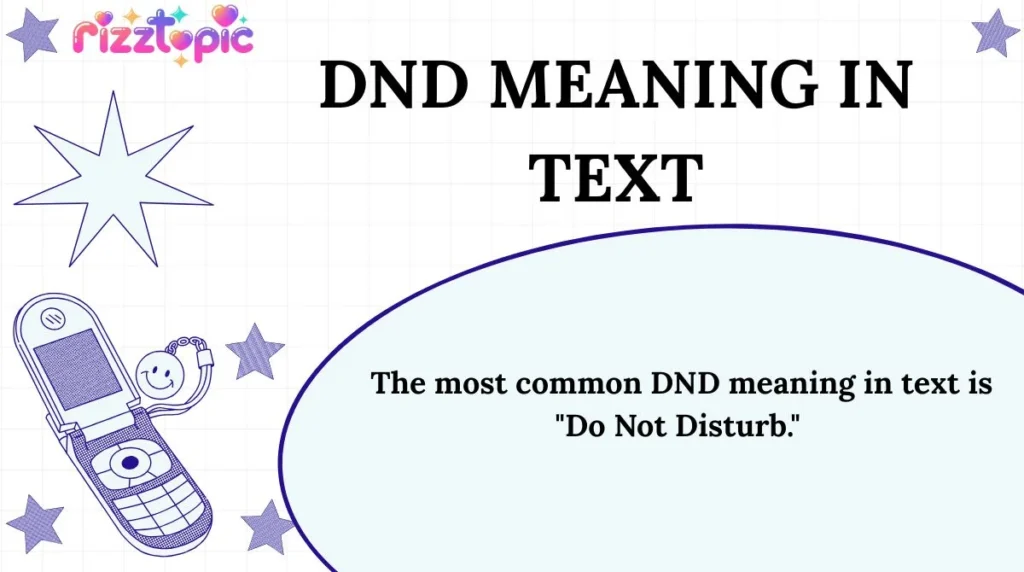
The most common DND meaning in text is “Do Not Disturb.” It is used to tell others that a person is busy, unavailable, sleeping, studying, working, or simply does not want interruptions.
For example:
- “I’m on DND right now.”
- “Sorry, my phone was on DND.”
- “Going into DND mode for a few hours.”
In texting and online chats, DND usually means:
- Do not send unnecessary messages.
- Responses may be delayed.
- The person is currently occupied.
- Notifications may be turned off.
Secondary Meanings of DND
Although “Do Not Disturb” is the most popular meaning, DND can also stand for:
- Dungeons & Dragons (tabletop role-playing game)
- Department of National Defence (government usage)
- Do Not Dial (telecommunications)
- Dynamic Network Distribution (technical fields)
The correct meaning depends on the context of the conversation.
Background & Origin of DND
The phrase “Do Not Disturb” existed long before smartphones. Hotels commonly placed “Do Not Disturb” signs on room doors so guests could enjoy privacy.
As technology evolved, phone manufacturers adopted the phrase for notification settings. Mobile devices introduced a special mode that silenced calls, messages, and alerts.
Eventually, people shortened the phrase to DND because texting encourages quick communication. The abbreviation became common on:
- Mobile phones
- Messaging apps
- Social media platforms
- Gaming communities
Today, DND is recognized worldwide and is one of the most commonly used status indicators online.
Usage in Different Contexts
The meaning of DND can change slightly depending on where it is used.
In Text Messages
People use DND to explain delayed responses.
Examples:
- “Sorry for replying late. I was on DND.”
- “Putting my phone on DND during class.”
On Social Media
Users often post DND statuses when they need a break.
Examples:
- “DND until Monday.”
- “Mental health day. DND.”
In Gaming
Gamers use DND to avoid interruptions during matches.
Examples:
- “Ranked game tonight. DND.”
- “On DND while streaming.”
In Work Environments
Professionals activate DND during meetings or focused work sessions.
Examples:
- “DND from 2 PM to 4 PM.”
- “Please email me if urgent.”
Meanings Across Platforms
Different apps use DND in similar ways, but the features may vary.
On WhatsApp, DND usually means notifications are muted or the user prefers not to receive messages immediately.
Examples:
- “On DND, will reply later.”
- Status updates indicating limited availability.
Instagram users may mention DND in:
- Bios
- Notes
- Stories
- Status updates
It often signals that direct messages may not get quick replies.
TikTok
TikTok creators sometimes write DND when:
- Taking a social media break
- Focusing on content creation
- Limiting message notifications
Snapchat
On Snapchat, DND may refer to:
- The app’s notification settings
- A user’s temporary unavailability
- A status indicating reduced interaction
Other Meanings of DND in Different Fields
Although texting users usually mean “Do Not Disturb,” DND has several industry-specific meanings.
Medical Field
DND may refer to specialized internal abbreviations used by healthcare organizations.
Telecommunications
In telecom systems, DND can mean:
- Do Not Dial
- Do Not Disturb services
Military and Government
Some countries use DND as shorthand for:
- Department of National Defence
Gaming Industry
One of the most famous alternate meanings is:
Dungeons & Dragons
In gaming discussions, DND often refers to the fantasy role-playing game rather than notification settings.
Technology
Technical documents may use DND for network or system-management terminology.
Common Misconceptions & Mistakes
Many people misunderstand DND when reading messages.
Common mistakes include:
- Assuming someone is angry.
- Thinking they blocked notifications permanently.
- Believing they do not want to talk at all.
- Confusing it with gaming-related DND references.
In most situations, DND simply means the person is temporarily unavailable.
Similar Terms & Alternatives
| Term | Meaning |
|---|---|
| DND | Do Not Disturb |
| AFK | Away From Keyboard |
| BRB | Be Right Back |
| OOO | Out of Office |
| Busy | Currently occupied |
| Offline | Not active online |
| Silent Mode | Notifications muted |
| Focus Mode | Limiting distractions |
These terms are similar but may not mean exactly the same thing.
How to Respond to DND
When someone says they are on DND, respecting their availability is usually best.
Appropriate responses include:
- “No worries, reply when you can.”
- “Got it, talk later.”
- “Take your time.”
- “Message me when you’re free.”
Chat Examples
Example 1
Person A: “I’m on DND for work.”
Person B: “Okay, good luck! 😊”
Example 2
Person A: “Phone on DND tonight.”
Person B: “No problem, talk tomorrow.”
Example 3
Person A: “Going DND for exams.”
Person B: “Hope your studies go well! 📚”
Example 4
Person A: “DND mode activated.”
Person B: “Got it. I’ll check back later 👍”
Differences From Similar Words
While DND and other status terms appear similar, there are important differences.
DND vs AFK
- DND means do not interrupt.
- AFK means away from the device.
DND vs Offline
- DND users may still be online.
- Offline users are not currently connected.
DND vs Busy
- Busy describes a condition.
- DND is often a notification or communication preference.
DND vs Silent Mode
- Silent mode mutes sounds.
- DND may block or manage notifications more intelligently.
Relevance in Online Conversations & Dating Apps
DND is widely used on dating apps and messaging platforms.
People may use it to:
- Set communication boundaries.
- Focus on work or studies.
- Avoid distractions.
- Manage screen time.
Examples include:
- “DND after 10 PM.”
- “Usually on DND during work hours.”
- “Replies may be slow because of DND.”
This helps create realistic expectations and reduces misunderstandings.
Popularity & Trends Over Time
The popularity of DND has grown significantly due to smartphones and social media.
Several factors contributed to its rise:
- Increased digital communication.
- Built-in phone DND settings.
- Growing awareness of productivity.
- Focus on mental well-being.
- Reduced notification overload.
Google search interest remains steady because new users continue encountering the abbreviation across apps and devices.
Social media platforms have also helped spread the term through bios, stories, status updates, and messaging features.
FAQs
What does DND mean in text messages?
DND usually means Do Not Disturb, indicating someone does not want interruptions or may respond later.
Does DND mean someone is ignoring me?
No. It generally means the person is busy, sleeping, working, or limiting notifications.
What does DND mean on WhatsApp?
It usually means the user has muted notifications or is temporarily unavailable.
Is DND the same as silent mode?
Not exactly. DND often offers more control over calls, messages, and alerts than standard silent mode.
What does DND mean in gaming?
In gaming communities, DND often refers to Dungeons & Dragons.
Can I still receive messages while on DND?
Yes. Messages usually arrive normally, but notifications may be silenced.
Why do people use DND?
People use it to focus, reduce distractions, improve productivity, and maintain personal boundaries.
Conclusion
DND is one of the most common abbreviations used in modern digital communication.
In most text messages and social media conversations, it stands for Do Not Disturb, signaling that a person is temporarily unavailable or prefers not to be interrupted.
The abbreviation has evolved from a simple hotel privacy sign into a widely recognized smartphone and messaging feature. Today, it helps people manage notifications, maintain focus, and communicate their availability clearly.
Although DND can have other meanings in gaming, government, medical, and technical fields, context usually makes the intended meaning easy to identify.
Understanding the term can help you communicate more effectively across messaging apps, social networks, and professional environments.
As online communication continues to grow, DND remains a simple yet useful way to set expectations and reduce unnecessary interruptions.