Have you ever received a message that simply says “hmm” and wondered what the sender actually meant? This small expression appears everywhere in texting, social media, and online conversations.
Yet its meaning can change depending on the situation, tone, and context.
People often search for “hmm meaning in text” because it can be confusing. Sometimes it shows curiosity, while other times it may signal doubt, hesitation, or deep thinking.
Understanding its meaning helps you avoid misunderstandings and respond appropriately.
The good news is that “hmm” is usually simple to interpret when you look at the conversation around it. The number of letters, punctuation, and timing can all provide clues about what the sender is trying to communicate.
In this guide, you’ll learn the meaning of “hmm” in text messages, its origins, how it is used across different platforms, and the best ways to respond when someone sends it to you.
Meaning & Definition of Hmm
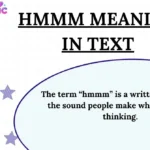
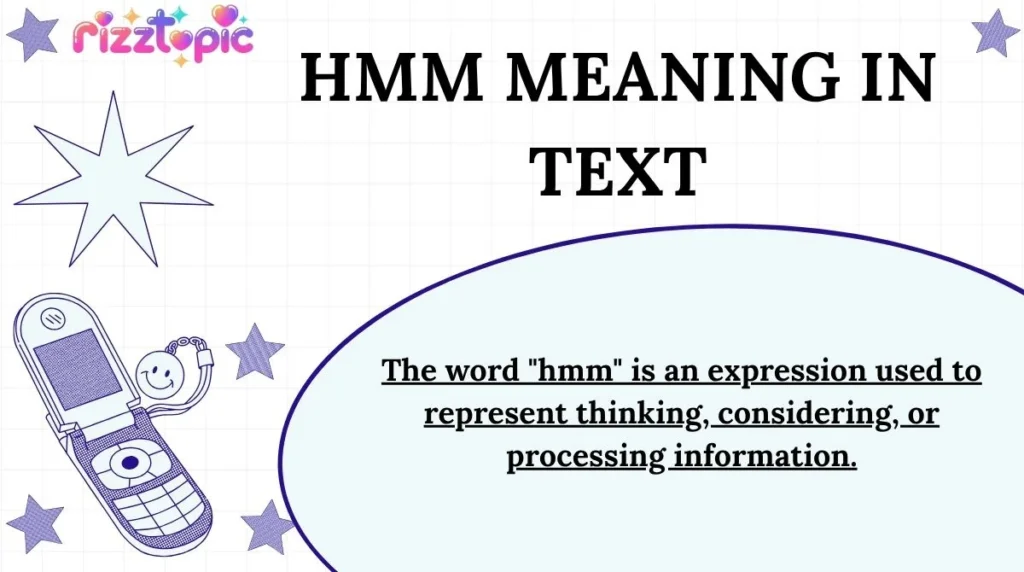
The word “hmm” is an expression used to represent thinking, considering, or processing information. It is not a formal word with a fixed definition. Instead, it is an informal sound people make when they are reflecting on something.
In text messages, “hmm” usually means that someone is taking a moment to think before responding. It can indicate uncertainty, curiosity, skepticism, or interest depending on the conversation.
Primary Meaning
The most common meaning of “hmm” is:
- I am thinking about what you said.
- I need a moment to consider this.
- I’m processing the information.
Secondary Meanings
Depending on context, “hmm” may also mean:
- Doubt or suspicion
- Mild disagreement
- Curiosity
- Confusion
- Interest
- Surprise
- Flirting in some situations
Quick Examples
- “Hmm, that’s interesting.”
- “Hmm, I’m not sure about that.”
- “Hmm, tell me more.”
- “Hmm 🤔”
The exact meaning often depends on the tone of the conversation and the relationship between the people chatting.
Background & Origin of Hmm
The expression “hmm” has existed for a very long time in spoken language. It developed naturally as a sound people make while thinking or pausing before speaking.
Unlike many internet abbreviations, “hmm” did not originate online. People have used similar sounds in conversations for centuries. Linguists classify it as an interjection, which is a word or sound used to express emotion or reaction.
As digital communication became popular, people started typing “hmm” exactly as they would say it in real life. This made it easy to convey thoughtfulness without writing a complete sentence.
The expression evolved further with texting and social media. Users began changing the length of the word to add emotional meaning.
Examples include:
- Hm
- Hmm
- Hmmm
- Hmmmmm
Generally, a longer version suggests more thinking, hesitation, or curiosity. However, interpretation varies between individuals.
Today, “hmm” is recognized globally and is used across many languages and cultures. Even when people speak different languages, the expression often carries a similar meaning of contemplation or reflection.
Usage in Different Contexts
The meaning of “hmm” changes based on where and how it is used.
Casual Chat
In personal conversations, “hmm” usually indicates thinking.
Example:
- Friend: “Should I buy this phone?”
- You: “Hmm, it depends on your budget.”
Social Media
On social platforms, users often comment “hmm” when they find something surprising or questionable.
Example:
- “Hmm, that doesn’t seem right.”
Workplace Communication
In professional settings, “hmm” is less common but may still appear in informal chats.
Example:
- “Hmm, let’s review the numbers again.”
Group Conversations
People may use “hmm” to show they are following the discussion without immediately taking a position.
Dating Conversations
In dating chats, “hmm” can signal curiosity, playful interest, or uncertainty. Context is especially important in these situations.
The same word can communicate completely different emotions depending on the relationship between the people involved.
Meanings Across Platforms
On WhatsApp, “hmm” often means:
- Thinking
- Considering a suggestion
- Unsure about something
Example:
- “Hmm, maybe we can meet tomorrow.”
On Instagram, users may write “hmm” in comments or direct messages when reacting to posts.
Example:
- “Hmm, interesting perspective.”
TikTok
TikTok users commonly use “hmm” when responding to videos that seem surprising, suspicious, or thought-provoking.
Example:
- “Hmm, something isn’t adding up.”
Snapchat
On Snapchat, “hmm” often appears in casual conversations and can suggest curiosity or mild flirting.
Example:
- “Hmm 😏 tell me more.”
Platform culture can influence interpretation, but the core idea of thinking or reacting remains the same.
Other Fields and Technical Meanings
Although “hmm” is mostly associated with texting, it has meanings in other fields.
Technology
In computer science, HMM stands for Hidden Markov Model. It is a statistical model used in machine learning and data analysis.
Medical Field
Some medical organizations and research papers may use HMM as an abbreviation for specific terms, depending on context.
Aviation
In aviation and engineering, HMM can appear as a technical abbreviation in manuals or documentation.
Scientific Research
Researchers may use HMM to describe analytical models, prediction systems, or classification methods.
When reading technical documents, always check whether HMM is being used as an abbreviation rather than a texting expression.
Common Misconceptions & Mistakes
Many people misunderstand the meaning of “hmm.”
Misconception 1: Hmm Is Always Negative
Not true. It often means someone is simply thinking.
Misconception 2: Hmm Means Disinterest
Sometimes it does, but not always. Many people use it while genuinely considering a response.
Misconception 3: Longer Means Anger
“Hmmm” may indicate deeper thought rather than frustration.
Misconception 4: Everyone Uses It the Same Way
Different people interpret and use “hmm” differently.
Common Mistakes
- Overanalyzing a single “hmm”
- Assuming rejection immediately
- Ignoring the conversation context
- Judging meaning without considering emojis
Similar Terms & Alternatives
| Term | Meaning |
|---|---|
| Hm | Brief thinking pause |
| Hmm | Thinking or considering |
| Hmmm | Deeper reflection |
| Oh | Realization |
| Well | Transition into an opinion |
| Uh | Hesitation |
| Ah | Understanding |
| Interesting | Curiosity or attention |
| Let me think | Direct statement of consideration |
These alternatives can communicate similar emotions but with different levels of clarity.
How to Respond to Hmm
The best response depends on the conversation.
If They Are Thinking
Reply:
- “Take your time.”
- “What do you think?”
If They Seem Curious
Reply:
- “Want to know more?”
- “I can explain further.”
If They Seem Unsure
Reply:
- “Any concerns?”
- “What’s on your mind?”
Chat Examples
- Person: “Hmm…”
You: “What’s making you think? 😊” - Person: “Hmm, interesting.”
You: “Glad you think so!” - Person: “Hmmm 🤔”
You: “Need more details?” - Person: “Hmm, maybe.”
You: “No worries, take your time.”
Differences From Similar Words
While “hmm” is often grouped with other reaction words, it has a unique role.
Hmm vs Uh
- Hmm = Thinking
- Uh = Hesitation while speaking
Hmm vs Oh
- Hmm = Considering
- Oh = Realizing
Hmm vs Ah
- Hmm = Processing information
- Ah = Understanding information
Hmm vs Interesting
- Hmm = Internal reflection
- Interesting = Direct evaluation
These subtle differences help shape the tone of conversations.
Relevance in Online Conversations & Dating Apps
“Hmm” is extremely common in modern digital communication.
In online conversations, it allows users to react without committing to a full response immediately. It creates a natural pause similar to real-life speech.
On dating apps, the meaning becomes more nuanced. A “hmm” may indicate:
- Curiosity about someone
- Playful teasing
- Evaluation of a statement
- Uncertainty about a response
Examples:
- “Hmm, you seem interesting.”
- “Hmm, that’s a bold claim.”
- “Hmmm 😏”
Because dating conversations rely heavily on tone, context is essential when interpreting the message.
Popularity & Trends Over Time
The use of “hmm” has remained consistent for decades because it mirrors natural human speech.
Search interest for “hmm meaning in text” increases as texting and social media continue to dominate communication. Many users look for explanations after receiving an unclear message.
Social media platforms have also contributed to its popularity by encouraging short, quick reactions. Instead of writing a complete sentence, users can simply type “hmm” to express thought or curiosity.
Modern messaging apps, emojis, and internet culture have expanded the ways people interpret the expression, making it one of the most flexible reactions online.
FAQs
What does hmm mean in a text message?
It usually means the sender is thinking, considering something, or processing information.
Is hmm a positive or negative response?
It can be either. The meaning depends on the context and tone of the conversation.
What does hmmm mean from a girl?
It often indicates thought, curiosity, interest, or uncertainty. Context matters more than the word itself.
Is hmm rude?
Not usually. Most people use it as a natural thinking response.
What does hmm mean in dating?
It can suggest curiosity, evaluation, flirting, or uncertainty depending on the conversation.
Why do people type multiple m’s in hmmm?
Extra letters often emphasize deeper thinking or stronger emotion.
Does hmm mean someone is uninterested?
Not necessarily. Many people use it when they are genuinely considering what was said.
Conclusion
The meaning of “hmm” in text is simple on the surface but surprisingly flexible in real conversations. Most often, it signals that someone is thinking, reflecting, or considering information before responding.
Because tone is difficult to read online, context plays a major role in understanding what “hmm” actually means. The same word can express curiosity, doubt, interest, hesitation, or even playful flirting.
Across WhatsApp, Instagram, TikTok, Snapchat, and dating apps, “hmm” remains one of the most common reaction expressions. Its popularity comes from its ability to communicate thought without requiring a long message.
The next time someone sends you “hmm,” look at the surrounding conversation rather than the word alone. Doing so will help you understand the real message behind it and respond more naturally.