When texting, browsing social media, or chatting online, you may come across the abbreviation WTV and wonder what it means.
Many people search for this term because internet slang changes quickly, and understanding these shortcuts helps conversations make more sense.
WTV is commonly used in casual messaging and social media posts. It can express different emotions depending on the situation, including indifference, agreement, or a relaxed attitude toward a topic.
As digital communication becomes faster, abbreviations like WTV save time and make chats feel more natural.
Knowing the meaning behind these short forms helps you understand messages correctly and respond with confidence.
In this guide, you’ll learn the meaning of WTV in text, its origin, common uses, platform-specific meanings, and how to reply when someone sends it to you.
Meaning & Definition of WTV
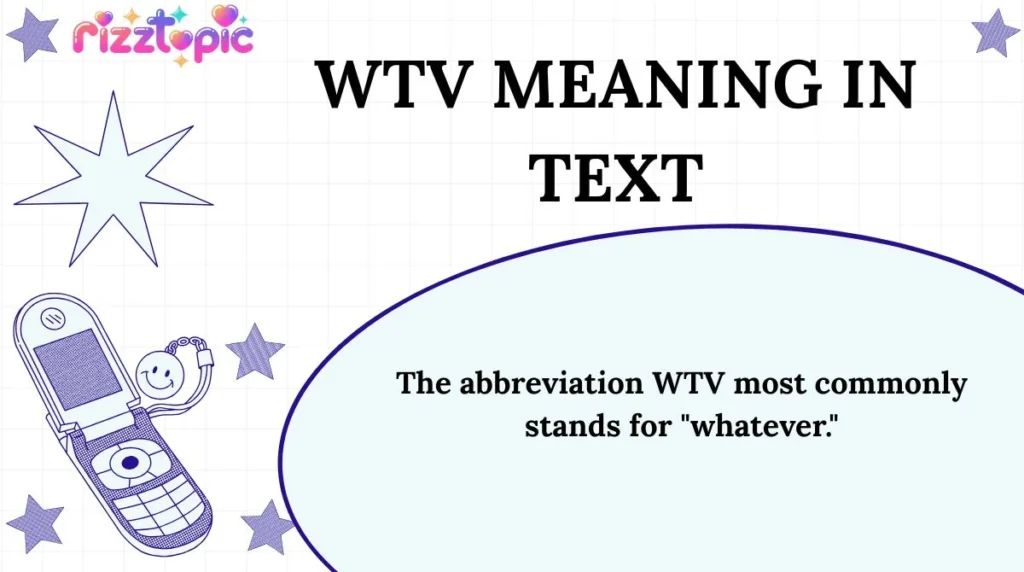
The abbreviation WTV most commonly stands for “whatever.” People use it in text messages, online chats, and social media conversations when they want to shorten the word.
In many situations, WTV expresses a casual or relaxed attitude. It can mean that the person does not have a strong preference or is willing to accept any option. For example, if someone asks where you want to eat, replying with “WTV” may mean you’re fine with any choice.
The meaning can also change depending on tone and context. Sometimes it sounds friendly and easygoing. Other times it may appear dismissive or annoyed if used during an argument.
Primary Meaning:
- WTV = Whatever
Secondary Meanings:
- Anything is fine
- No preference
- It doesn’t matter
- I don’t care much about the outcome
Examples:
- “Pick any movie, WTV.”
- “WTV works for me.”
- “WTV, let’s move on.”
Because text messages lack voice tone, readers often rely on context to understand whether WTV is friendly, neutral, or negative.
Background & Origin of WTV
WTV emerged from the growing trend of internet abbreviations and text messaging shortcuts. As mobile phones became popular, users looked for faster ways to communicate while typing fewer characters.
The word “whatever” was already commonly used in spoken English before texting became widespread. When online messaging platforms gained popularity, users shortened it to WTV to save time and effort.
The abbreviation became more visible through instant messaging services, online forums, chat rooms, and later social media platforms. Younger users especially adopted it because it fit the fast-paced nature of digital communication.
Over time, WTV spread across different online communities. Its meaning remained largely connected to “whatever,” although users began applying it in various emotional tones.
Today, WTV is recognized by many internet users worldwide. It is part of a larger group of abbreviations that includes terms such as LOL, BRB, IMO, and IDK.
The popularity of WTV reflects how language naturally evolves in digital spaces. Shortened expressions help people communicate quickly while still conveying familiar meanings.
Usage in Different Contexts
The meaning of WTV can vary depending on where and how it is used. Understanding the context is important because the same abbreviation may communicate different attitudes.
Casual Chats
In everyday conversations, WTV often means “I’m okay with anything.”
Examples:
- “Where should we go?”
- “WTV, you choose.”
Social Media
On social platforms, users may write WTV in captions, comments, or replies to show a relaxed attitude.
Examples:
- “WTV happens, happens.”
- “Just enjoying life, WTV comes next.”
Gaming Communities
Gamers may use WTV when discussing strategies, teams, or decisions.
Examples:
- “Pick WTV character you want.”
- “WTV works best for the team.”
Workplace Messaging
Although less common, some people use WTV in informal workplace chats. However, professional communication usually favors complete words.
Example:
- “WTV schedule works for everyone.”
In formal environments, writing “whatever” or providing a specific answer is generally preferred.
Meanings Across Platforms
Different platforms encourage different communication styles, which can influence how WTV is interpreted.
On WhatsApp, WTV usually means “whatever” and often appears in personal conversations.
Example:
- “We can meet at 6 or 7.”
- “WTV is fine.”
Instagram users frequently use WTV in captions and comments to express a carefree attitude.
Examples:
- “Living my life, WTV comes next.”
- “WTV makes you happy.”
TikTok
TikTok users often use WTV in short comments, memes, and trending content.
Examples:
- “WTV 😂”
- “Do WTV you want.”
Snapchat
Snapchat conversations are typically casual and fast-paced, making abbreviations like WTV very common.
Examples:
- “WTV lol.”
- “WTV works 😎”
Across all platforms, the core meaning usually remains connected to “whatever.”
Other Fields and Technical Meanings
Although WTV most often means “whatever” in texting, the abbreviation can have different meanings in specialized fields.
Technology
In some technical contexts, WTV refers to a file format associated with recorded television content.
Broadcasting
Certain media systems use WTV as an abbreviation connected to video recording and television storage formats.
Business or Organizations
Some companies, projects, or organizations may use WTV as an acronym with unique meanings specific to their industry.
Aviation
In aviation or transportation documents, abbreviations can sometimes overlap with internet slang. The intended meaning depends entirely on the context.
Medical Settings
WTV is not a widely recognized standard medical abbreviation, but individual institutions may occasionally use it internally.
When encountering WTV outside social media or texting, always consider the surrounding context before assuming it means “whatever.”
Common Misconceptions & Mistakes
Many people misunderstand WTV because abbreviations can have multiple interpretations.
Common mistakes include:
- Assuming it always means anger.
- Believing it is rude in every situation.
- Using it in formal business emails.
- Misreading it as another acronym.
A friendly message like “WTV works for me” is usually harmless. However, a response such as “WTV.” during an argument may sound frustrated or dismissive.
Another mistake is using WTV in professional documents where clarity matters. Formal communication is generally better served by complete words and direct responses.
Understanding tone and context helps prevent misunderstandings.
Similar Terms & Alternatives
| Abbreviation | Meaning | Usage Style |
|---|---|---|
| WTV | Whatever | Casual |
| IDC | I Don’t Care | Informal |
| IDK | I Don’t Know | Common |
| NVM | Never Mind | Casual |
| IMO | In My Opinion | Discussion |
| TBH | To Be Honest | Honest opinion |
| K | Okay | Short reply |
| IGT | I Got This | Confident response |
These abbreviations often appear together in online conversations and texting environments.
How to Respond to WTV
The best response depends on the tone of the conversation.
If WTV means flexibility:
- “Great, I’ll decide then.”
- “Thanks, I’ll pick one.”
If WTV sounds neutral:
- “Sounds good.”
- “Okay, let’s do that.”
If WTV seems annoyed:
- “Is everything okay?”
- “We can talk about it if you want.”
Chat Examples:
Example 1
Friend: “Pizza or burgers?”
You: “WTV 😊”
Example 2
Friend: “Which movie?”
You: “WTV, you choose.”
Example 3
Friend: “Should we meet today?”
You: “WTV works for me 👍”
Example 4
Friend: “Let’s just leave it.”
You: “Okay, WTV.”
Differences From Similar Words
Although WTV shares similarities with other expressions, there are important differences.
WTV vs IDC
WTV often suggests flexibility.
IDC suggests a stronger lack of interest.
WTV vs IDK
WTV means “whatever.”
IDK means “I don’t know.”
WTV vs NVM
WTV accepts any option.
NVM ends or dismisses a topic.
These differences help users interpret online conversations more accurately.
Relevance in Online Conversations & Dating Apps
WTV appears frequently on dating apps because users often prefer casual communication.
In dating conversations, it can signal:
- Flexibility
- Relaxed personality
- Low-pressure communication
- Lack of strong preference
Examples:
- “WTV place you like is fine.”
- “WTV works for your schedule.”
However, overusing WTV can sometimes make someone seem uninterested. Giving a clear opinion occasionally can create a more engaging conversation.
In modern online communication, balancing flexibility with genuine interest often produces the best results.
Popularity & Trends Over Time
The popularity of WTV has grown alongside texting culture and social media use.
Search interest tends to increase when:
- New users encounter internet slang.
- Social media trends spread abbreviations.
- Viral videos include shorthand expressions.
- Messaging apps become more popular.
Google Trends data over the years generally shows recurring interest in texting abbreviations as users search for meanings and definitions.
Social platforms such as TikTok, Instagram, Snapchat, and WhatsApp continue to introduce younger audiences to abbreviations like WTV.
The abbreviation remains relevant because it is short, easy to type, and widely understood among internet users.
FAQs
What does WTV mean in text?
WTV usually means “whatever” in text messages and online conversations.
Is WTV rude?
Not always. It can be friendly, neutral, or rude depending on the context and tone.
What does WTV mean on Snapchat?
On Snapchat, WTV generally means “whatever” and is used casually in chats.
What does WTV mean on TikTok?
On TikTok, WTV often means “whatever” and appears in comments, captions, and memes.
What does WTV mean from a girl or guy?
The meaning is usually the same. Context determines whether it sounds relaxed, playful, or annoyed.
Can WTV mean something other than whatever?
Yes. In technical or industry-specific settings, WTV may represent other acronyms.
Is WTV the same as IDC?
No. WTV often means flexibility, while IDC suggests stronger indifference.
Should I use WTV in professional emails?
It is generally better to avoid WTV in formal communication and use complete words instead.
Conclusion
WTV is one of the many abbreviations that have become part of modern digital communication. In most cases, it stands for “whatever” and expresses flexibility, acceptance, or a relaxed attitude toward a decision.
The abbreviation is widely used across texting apps, social media platforms, gaming communities, and casual online conversations. While its core meaning remains consistent, tone and context can influence how it is interpreted.
Understanding WTV helps you communicate more effectively and avoid misunderstandings. Whether you see it on WhatsApp, Instagram, TikTok, or Snapchat, knowing its meaning makes online conversations easier to follow.
As internet language continues to evolve, abbreviations like WTV will likely remain a common part of everyday digital communication.