People often come across internet slang while texting, scrolling social media, or chatting online.
One abbreviation that appears frequently is STFU, and many users search for its meaning because they are unsure whether it is a joke, an insult, or a casual expression.
Understanding text abbreviations helps people communicate better online. Since digital conversations move quickly, short forms like STFU are commonly used across messaging apps and social platforms.
The meaning of STFU can change depending on the situation, the relationship between the people talking, and the tone of the conversation. Sometimes it is playful, while other times it can sound rude or offensive.
If you have seen STFU in a message, comment, meme, or dating app conversation, this guide will explain exactly what it means, where it came from, and how people use it today.
Meaning & Definition of STFU
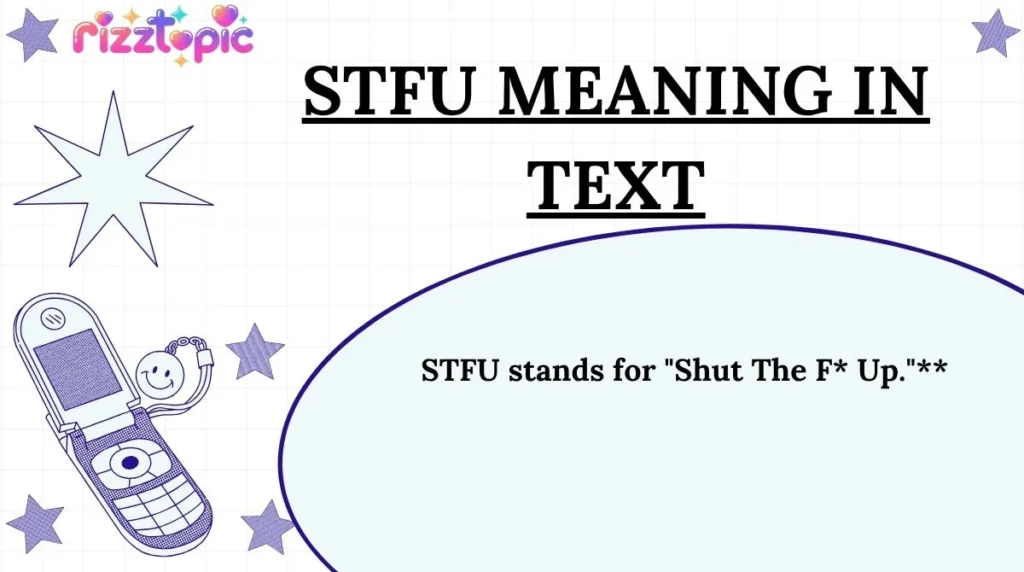
STFU stands for “Shut The F* Up.”**
It is a popular internet abbreviation used to tell someone to stop talking. The phrase is considered informal and can be rude depending on the context.
Primary Meaning
The most common meaning is:
STFU = Shut The F* Up**
Example:
- Person A: “I’ve told this story ten times.”
- Person B: “STFU 😂 That’s hilarious.”
In this example, the phrase is used jokingly.
Secondary Meanings
While STFU almost always means “Shut The F*** Up,” the tone can vary:
- Playful surprise
- Friendly teasing
- Excitement
- Disbelief
- Annoyance
- Anger
Examples:
- “STFU! You won the lottery?”
- “STFU, that’s the funniest thing I’ve heard today.”
- “Just STFU and listen.”
The meaning stays the same, but the emotion behind it changes.
Background & Origin of STFU
STFU became popular during the early days of internet chat rooms, online forums, and instant messaging platforms.
As texting became more common, users looked for faster ways to type long phrases. Abbreviations such as:
- LOL
- BRB
- OMG
- IDK
- STFU
started appearing everywhere online.
The phrase itself existed long before the internet. However, shortening it to STFU helped people communicate quickly in digital conversations.
During the 2000s and 2010s, STFU spread through:
- Online gaming communities
- Internet forums
- Social media platforms
- Meme culture
- Group chats
Today, it remains one of the most recognized slang abbreviations worldwide.
Usage in Different Contexts
The meaning of STFU often depends on where and how it is used.
Casual Chat
Friends may use it jokingly.
Example:
- “STFU 😂 You’re lying.”
Gaming
Players sometimes use it during competitive matches.
Example:
- “STFU and focus on the game.”
Social Media
People use it to react to surprising news.
Example:
- “STFU! That’s incredible.”
Workplace
Using STFU in professional settings is generally inappropriate.
Example:
- Avoid saying “STFU” to coworkers or clients.
Family Conversations
Some families joke using slang, but many consider STFU disrespectful.
Always consider your audience before using it.
Meanings Across Platforms
On WhatsApp, STFU is often used among friends.
Example:
- “STFU 😂 I can’t believe that happened.”
Instagram users frequently write STFU in comments.
Example:
- “STFU, this outfit is amazing!”
TikTok
TikTok creators and viewers use it when reacting to shocking content.
Example:
- “STFU! No way that actually happened.”
Snapchat
On Snapchat, STFU usually appears in casual conversations and streak chats.
Example:
- “STFU 😭 You’re so funny.”
Across all platforms, the abbreviation usually keeps the same meaning but may sound playful rather than aggressive.
Other Fields and Technical Meanings
Although STFU is mainly known as internet slang, abbreviations sometimes have different meanings in specialized industries.
Possible alternative meanings may include:
| Field | Possible Meaning |
|---|---|
| Internet Slang | Shut The F*** Up |
| Internal Projects | Company-specific code |
| Technical Systems | Rare custom abbreviations |
| Education | Context-specific shorthand |
However, when seen in texts, chats, or social media, STFU almost always refers to “Shut The F*** Up.”
Common Misconceptions & Mistakes
Many people misunderstand STFU because they only see it online.
Mistake 1: Thinking It Is Always Aggressive
Not always.
Example:
- “STFU 😂 That’s amazing.”
This is often playful.
Mistake 2: Using It Professionally
STFU should generally not be used in:
- Work emails
- Business meetings
- Academic writing
Mistake 3: Assuming Everyone Finds It Funny
Some people view it as offensive, even when intended as a joke.
Mistake 4: Using It With Strangers
People who do not know you may interpret it negatively.
Similar Terms & Alternatives
| Term | Meaning |
|---|---|
| STFU | Shut The F*** Up |
| Hush | Be quiet |
| Quiet Down | Lower your voice |
| Chill | Relax |
| Zip It | Stop talking |
| Be Quiet | Direct request for silence |
| Calm Down | Reduce emotional intensity |
These alternatives are often more polite than STFU.
How to Respond to STFU
Your response depends on the tone of the conversation.
If It Is a Joke
- “😂 Nope, it’s true!”
- “I know, right?”
- “You don’t believe me?”
- “Haha, I swear!”
If It Sounds Rude
- “Let’s keep things respectful.”
- “No need to be rude.”
- “I’m just sharing my opinion.”
- “Let’s move on.”
Chat Examples
- Friend: “STFU 😂 You met a celebrity?”
- Reply: “Yep, I actually did! 😎”
- Friend: “STFU, that’s outrageous.”
- Reply: “I couldn’t believe it either 😂”
- Stranger: “STFU.”
- Reply: “Let’s keep the conversation respectful.”
- Gamer: “STFU and play.”
- Reply: “Let’s focus on winning.”
Differences From Similar Words
STFU vs Hush
- STFU is stronger and more offensive.
- Hush is softer and often playful.
STFU vs Be Quiet
- STFU contains profanity.
- Be Quiet is more polite.
STFU vs Calm Down
- STFU targets talking.
- Calm Down targets emotions.
STFU vs Chill
- Chill encourages relaxation.
- STFU tells someone to stop speaking.
The tone difference is important when choosing which phrase to use.
Relevance in Online Conversations & Dating Apps
STFU appears frequently in modern online communication.
In Online Conversations
People use it to express:
- Shock
- Excitement
- Humor
- Disbelief
Examples:
- “STFU, no way!”
- “STFU 😂 That’s hilarious.”
In Dating Apps
On dating platforms, context matters greatly.
Playful example:
- “STFU 😭 You’re actually adorable.”
Negative example:
- “STFU and leave me alone.”
The same abbreviation can create very different impressions depending on tone and relationship.
Popularity & Trends Over Time
STFU has remained popular for many years because internet slang continues to evolve around short, memorable abbreviations.
Google search interest tends to rise whenever:
- New users encounter the abbreviation
- Viral memes become popular
- Social media trends spread
- Younger audiences join online platforms
Reasons for its continued popularity include:
- Easy to type
- Easy to remember
- Widely recognized
- Common in memes
- Frequently used in reaction posts
Even as new slang emerges, STFU remains one of the most searched internet abbreviations.
FAQs
What does STFU mean in text?
STFU stands for “Shut The F* Up.”** It is used to tell someone to stop talking, either seriously or jokingly.
Is STFU rude?
Yes, it can be rude because it contains profanity. However, friends sometimes use it playfully.
What does STFU mean from a girl?
The meaning is usually the same. The tone depends on the conversation and relationship.
Is STFU a bad word?
The abbreviation contains a swear word, so many people consider it offensive.
What does STFU mean on Snapchat?
On Snapchat, it usually means “Shut The F*** Up” and is often used jokingly between friends.
What does STFU mean on TikTok?
It is commonly used as a reaction to surprising, funny, or unbelievable content.
Can STFU be used positively?
Yes. People sometimes use it to express excitement or disbelief rather than anger.
Is STFU appropriate at work?
No. It is generally considered unprofessional and should be avoided in workplace communication.
Conclusion
STFU is one of the most recognizable internet abbreviations and stands for “Shut The F*** Up.” While the phrase sounds harsh, its actual meaning often depends on context, tone, and the relationship between the people involved.
In casual chats, social media comments, and meme culture, it is frequently used as a playful reaction to surprising or funny situations. In more formal environments, however, it can come across as rude and disrespectful.
Understanding when and where people use STFU can help you interpret online conversations more accurately.
Whether you see it on WhatsApp, Instagram, TikTok, Snapchat, or a dating app, context is the key to understanding the intended message.
The next time you encounter STFU in a text, you’ll know exactly what it means and how to respond appropriately.